












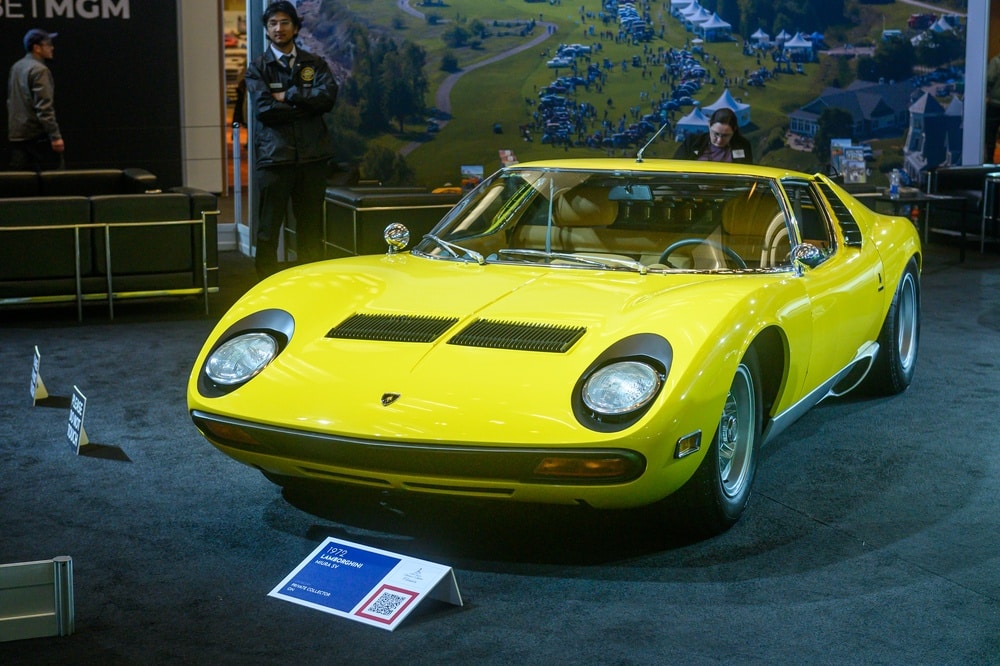
In the world of high-end automotive preservation, few projects carry as much weight as the restoration of a 1972 Lamborghini Miura SV. This specific model, often cited as the pinnacle of the Miura’s evolution, recently emerged from a meticulous three-year restoration process led by Lamborghini’s dedicated heritage department, Polo Storico. The finished masterpiece was recently showcased at the Anantara Concorso Roma, proving that while automotive trends are fleeting, the Miura’s Gandini-designed silhouette remains an eternal benchmark of Italian elegance.
The Journey from Non-Compliant to Concours-Ready
When this particular Miura SV arrived at the Sant’Agata Bolognese headquarters in late 2023, it was a shadow of its former self. According to Lamborghini, the vehicle was in a “non-compliant” state, meaning previous owners had likely modified or repaired it using parts and finishes that deviated from the original 1972 factory specifications. For a car of this pedigree, such deviations don’t just hurt the aesthetic—they significantly impact the vehicle’s historical value and provenance.
The restoration was not a mere cosmetic refresh. Over 36 months, the car was completely disassembled, allowing technicians to inspect every nut, bolt, and body panel. This level of factory-backed restoration is essential for ensuring that the V12-powered icon functions exactly as it did when it first left the assembly line over half a century ago. By stripping the car to its bare chassis, Polo Storico was able to correct decades of “ad-hoc” repairs and return the vehicle to its authentic engineering roots.
A Rare Palette: Luci del Bosco and Gold
The most striking element of this restoration is undoubtedly its color. Rather than opting for the more common reds or oranges typically associated with 1970s supercars, this SV was refinished in “Luci del Bosco”—a deep, metallic brown that translates to “Forest Light.” While brown can be a polarizing choice for modern vehicles, on the Miura SV, it highlights the car’s muscular haunches and low-slung profile with an understated sophistication.
To provide the necessary contrast, the exterior is accented by the Miura’s signature gold-finished wheels and matching lower side skirts. This specific color combination represents a sophisticated era of GT car design, moving away from the loud, vibrant shades of the late sixties into a more mature, refined aesthetic that defined the early seventies.
Archival Research and the Perfect Interior
Restoring the cabin of a classic Lamborghini requires more than just new leather; it requires historical detective work. The interior of this Miura SV features a specific shade of tan known as “Senape” (Mustard). Polo Storico’s team had to delve deep into the company’s internal archives to find the exact pigment and texture used in 1972. Because the “Senape” shade evolved over different production years and models, matching the period-correct 1972 grain was vital for the car’s certification.
The attention to detail extended to the hardware as well. Every grille on the front fenders and the iconic louvers covering the rear V12 engine were carefully refurbished. These components are notorious for showing age, but under the care of factory experts, they now look as they did the day the car was delivered to its original owner.
A Triumphant Display in Rome
The Miura SV was not the only star of the show at the Anantara Concorso Roma. Lamborghini also brought out a selection of heavy hitters to celebrate its heritage, including two 25th Anniversary Countach models. However, the emotional highlight for many was the appearance of the original Miura P400 from the opening sequence of the 1969 film *The Italian Job*.
That cinematic icon, which Polo Storico restored in 2019, secured first place in Class XIV at the event, a category dedicated to the great sports grand tourers of the 1970s. The victory serves as a testament to the enduring appeal of the Miura platform and the effectiveness of factory-certified restorations in maintaining the legacy of the Raging Bull.
This three-year restoration project serves as a reminder that the Miura SV is more than just a car; it is a piece of industrial art. By leveraging its heritage archives and the unmatched skill of its Polo Storico technicians, Lamborghini has ensured that this Luci del Bosco SV will continue to represent the absolute peak of 1970s automotive design for decades to come. The project underscores the growing importance of factory provenance in the collector market, where authenticity is the ultimate currency.