




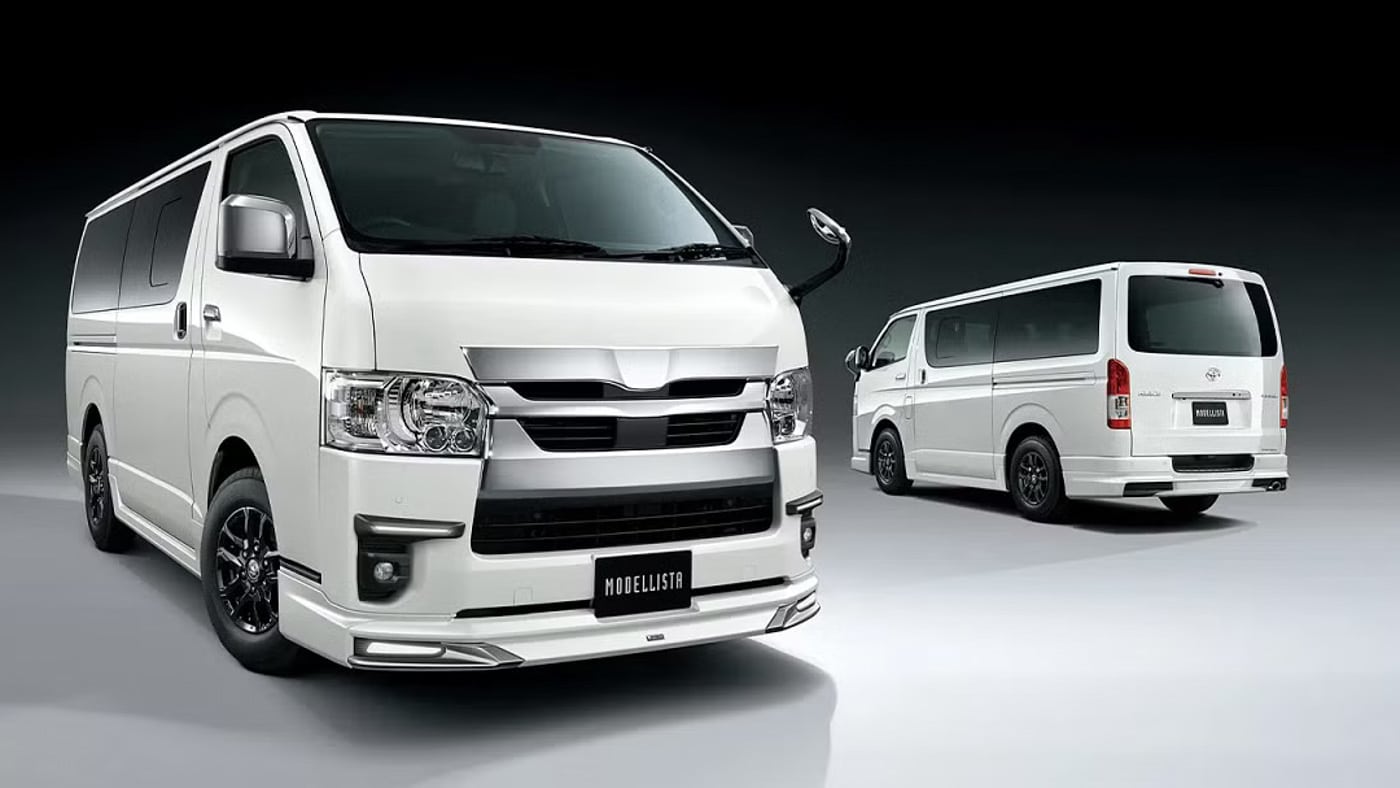
For more than two decades, the Toyota HiAce H200 has served as the backbone of Japan’s logistics and transport sectors. Since its debut in 2004, it has remained remarkably consistent, receiving minor tweaks while its fundamental “cab-over” design stayed frozen in time. However, the automotive landscape is shifting, and Toyota is finally preparing to retire its long-serving veteran. Reports suggest that a groundbreaking successor is slated for an early 2027 debut, marking the most significant architectural shift in the HiAce’s history.
A Departure from the Classic Cab-Over Silhouette
The defining characteristic of the HiAce for generations has been the driver sitting directly atop the engine. While this “cab-over” layout maximizes cargo space relative to the vehicle’s footprint, it presents challenges for modern crash safety standards and ride comfort. The next-generation model is expected to move toward a “semi-bonnet” configuration. This change isn’t just aesthetic; it allows for a dedicated crumple zone at the front, significantly improving safety ratings.
Design cues are likely to be drawn from the concepts showcased at the recent Japan Mobility Show. These prototypes suggest a blend of the futuristic, utilitarian aesthetic seen in the 2023 Kayoibako concept with the practical requirements of a commercial workhorse. Expect a shorter hood than the international H300 model, specifically tailored to navigate the narrow, high-density streets of Tokyo and Osaka without sacrificing the maneuverability that made the H200 a legend.
Engineering Excellence: The TNGA Transition
Underpinning the new HiAce will be a variation of the Toyota New Global Architecture (TNGA). This transition is a massive “value-add” for fleet operators and private owners alike. By moving to a modern modular platform, the HiAce will benefit from a lower center of gravity and increased structural rigidity. This translates to a van that feels less like a commercial truck and more like a modern passenger vehicle in terms of steering precision and vibration dampening.
Furthermore, the TNGA platform enables the integration of Toyota’s latest safety suite. Advanced Driver Assistance Systems (ADAS), such as lane-keeping assist, adaptive cruise control, and improved pedestrian detection, will finally bring the HiAce into the modern era, making it a much more competitive option against European rivals.
Powertrain Strategy: The Hybrid Frontier
While the international H300 generation relies heavily on traditional internal combustion engines, the upcoming Japanese-market successor is rumored to embrace Toyota’s “multi-pathway” approach to electrification. A self-charging hybrid powertrain is expected to be the centerpiece of the lineup. For commercial users, this offers a sweet spot: significantly reduced fuel costs and lower emissions without the range anxiety or charging downtime associated with fully electric vans.
While a “Global HiAce BEV” concept was previously teased, current market trends suggest that a fully electric version might be deferred or offered as a niche variant. The focus remains on reliability and uptime—two areas where Toyota’s hybrid systems have proven their worth over millions of miles in taxi and delivery fleets worldwide.
Versatility and Customization
The HiAce has always been more than just a box on wheels. It serves as a blank canvas for ambulances, luxury shuttles, and, increasingly, “van-life” camper conversions. The new model will likely double down on this versatility, offering multiple wheelbase lengths and roof heights. We can also expect a more ergonomic interior that caters to professional drivers who spend eight or more hours behind the wheel, featuring improved digital interfaces and smarter storage solutions.
As the industry moves toward 2027, the arrival of a new HiAce represents a rare event in the automotive world—the rebirth of a tool that an entire economy relies upon. By balancing the need for compact dimensions with modern safety and hybrid efficiency, Toyota is ensuring its workhorse remains relevant for the next twenty years.
In summary, the next-generation Toyota HiAce is shaping up to be a masterclass in evolution. By migrating to the TNGA platform and adopting a hybrid-first mindset, Toyota is addressing the H200’s aging safety and efficiency profiles while maintaining the rugged dependability that defined the nameplate. For those who have relied on the flat-faced H200 for two decades, the shift to a semi-bonnet design might be a visual adjustment, but the gains in technology, comfort, and environmental impact will likely make it an immediate benchmark in the light commercial vehicle segment.