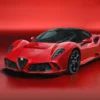


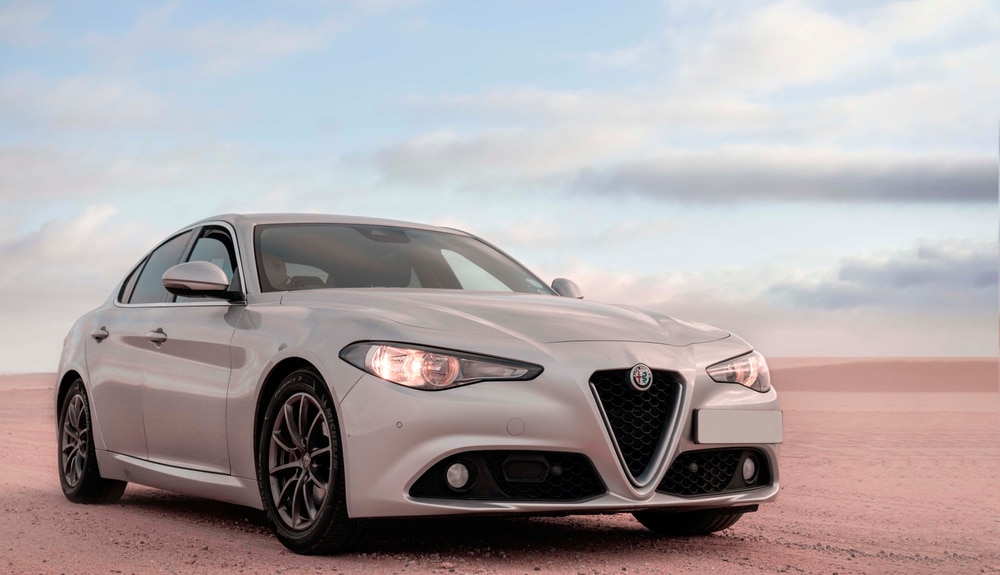
The automotive landscape is shifting rapidly, and Alfa Romeo is proving that even the most storied Italian brands must remain agile. Originally, the world expected a purely electric succession for the beloved Giulia sedan and Stelvio SUV. However, a significant strategic pivot has pushed the launch of these next-generation models to 2028. This delay isn’t just about timing; it represents a fundamental rethink of how Alfa Romeo will balance its heritage with the diverse demands of a global market.
The Engineering Challenge: Beyond the Battery
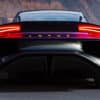
While many manufacturers are rushing toward electrification, Alfa Romeo’s leadership has observed a cooling in global EV demand. This prompted a decision to move the new Giulia and Stelvio onto the STLA Large platform—a versatile architecture shared with the new Dodge Charger. However, transitioning from a design originally optimized for electric propulsion to one that accommodates internal combustion engines (ICE) is a complex engineering feat.
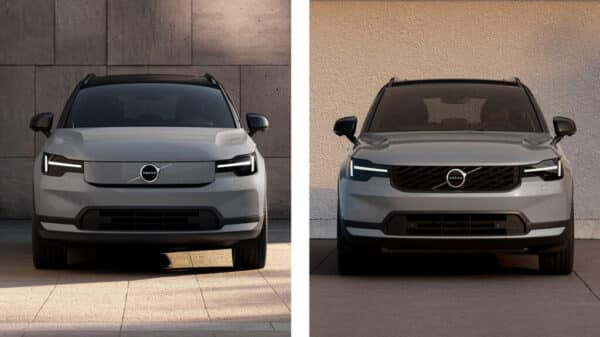
The primary hurdle involves thermal management. Internal combustion engines require significantly more airflow for cooling than electric motors. Consequently, the sleek, aerodynamic “closed” front ends typical of modern EVs have been sent back to the drawing board. Reports indicate that both the Giulia and Stelvio are undergoing rigorous reengineering to integrate functional grilles and revised fascias. This ensures that high-performance engines, such as the rumored twin-turbocharged units, can breathe properly without compromising the brand’s signature aesthetic.
A Multi-Energy Approach for a Global Audience
By delaying the launch, Alfa Romeo is ensuring it can offer “the power of choice.” The 2028 models will likely debut with a three-pronged powertrain strategy:
- Hybridized Four-Cylinders: Serving as the entry point, these units will offer a balance of efficiency and the spirited driving dynamics expected of an Alfa.
- The Hurricane Inline-Six: High-performance variants are expected to utilize the 3.0-liter twin-turbo “Hurricane” engine. In its high-output form, this engine is capable of producing 550 horsepower, providing a mechanical soul that many purists feared might be lost in the EV transition.
- Plug-in Hybrids (PHEV): These will bridge the gap for customers who want daily electric commuting capability without the range anxiety of a full BEV.
- Fully Electric (BEV): Leveraging the STLA Large platform’s ability to house battery packs up to 118 kWh, the electric versions will aim for class-leading range and rapid charging.
Defining the Performance Ceiling
There has been intense speculation regarding a 1,000-horsepower Quadrifoglio EV. While the STLA Large platform technically supports high-output tri-motor configurations—as seen in the Maserati GranTurismo Folgore—current industry insights suggest Alfa Romeo may focus on more “usable” performance metrics. Instead of chasing headline-grabbing horsepower figures that few drivers can fully exploit, the focus appears to be on chassis tuning, weight distribution, and maintaining the telepathic steering feel that defined the current-generation Giorgio platform.
CEO Santo Ficili has been clear about this pragmatic shift. As a global brand, Alfa Romeo cannot ignore that different regions are moving toward electrification at different speeds. By offering a “multi-energy” lineup, the brand protects its volume in North America and Italy while still complying with stricter regulations in other European markets.
Summary: A Strategic Evolution
The decision to delay the Giulia and Stelvio until 2028 is a calculated move to future-proof Alfa Romeo. By reengineering these vehicles to support electric, hybrid, and internal combustion powertrains, the brand is avoiding the trap of being tied to a single technology. This flexibility allows Alfa to stay true to its performance roots while navigating an unpredictable global market. For the Alfisti, the wait means the next generation of Italian icons will likely arrive with the sound of a turbocharged engine still very much a part of the experience.